





2.1 What is a Cryptocurrency?
Stop overpaying - start transferring money with Ogvio. Join the waitlist & grab early Rewards NOW! 🎁
In this section, I’m going to tell you what is a cryptocurrency!
The world of cryptocurrencies and blockchain technology, as a whole, is full of complicated concepts and ideas. To top that off, there seem to be new concepts being introduced to the general public, every other day or so! This can, for a fact, make it difficult for newbies to enter the industry.
Even the most difficult concepts can become approachable and understandable, if you have your fundamentals straight, though! And that is exactly what I’m here to help you with - by explaining crypto topics in a fun and beginner-friendly manner! In crypto, all fundamentals start out with figuring out what is a cryptocurrency.
In this section, we’re going to talk about cryptocurrencies. I’ll tell you what they are, what’s the purposes behind them, and we’ll also talk about how they are different from traditional, global currencies.
Without further ado, let’s get to it!

Video Explainer
Video Explainer: What is a Cryptocurrency?
Reading is not your thing? Watch the "What is a Cryptocurrency?" video explainer
What is a Cryptocurrency: For Beginners (Animated Explainer)

What is a Cryptocurrency?
So, how can the concept of cryptocurrencies be explained in a beginner-friendly way?
The simplest possible answer to that question is that cryptocurrencies are digital money that’s based on blockchain technology. For the sake of keeping this section on topic, I won’t get into the details of what blockchains are - there's a whole separate section about that in our Crypto 101 Handbook.
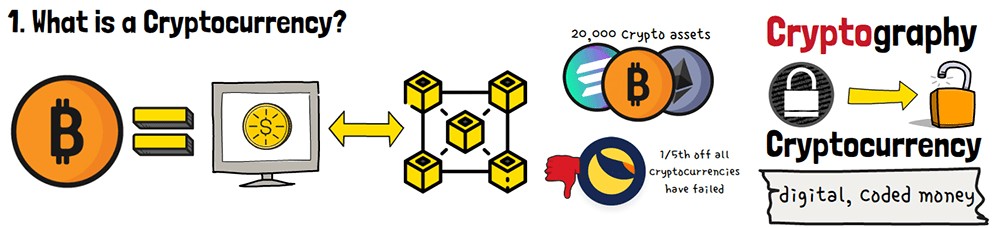
The term “crypto” is a shortened version of “cryptography”. If you’d like to learn what is cryptography, it’s honestly also a huge topic, in of its own - to put it short, though, it’s a form of solving and cracking difficult codes. So, the term “cryptocurrency” could be viewed as “digital, coded money”, in a very specific sense!
At the time of writing this cryptocurrency explanation, there are currently around 20,000 different crypto assets out there, on the market. Not all of them are successful, though - it is estimated that around 1/5th of all cryptocurrencies have failed. That’s a huge number!
Since examples are what I do best, allow me to give you one, in order to explain cryptocurrency, and to illustrate how crypto money is different from fiat money - in other words, our traditional, global currencies that we use, every single day (USD, EUR, and so on).
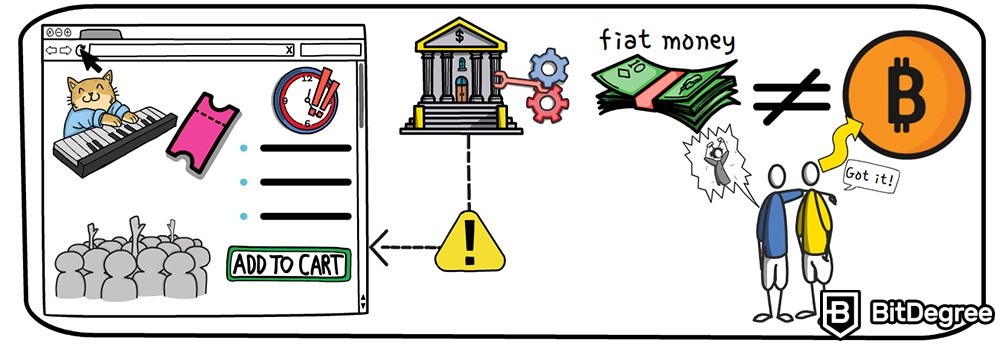
Imagine that you and your friend both decided to shop for concert tickets, online. A globally-huge pop star is coming to your city, and so, the tickets are hot - everyone’s trying to get their hands on them!
Both you and your friend keep refreshing the ticket vendor’s webpage, waiting for those tickets to become available to be purchased. As soon as they go live, both of you rush to enter your details, too - every moment counts, after all!
In just a few minutes, your friend already has their tickets in the email, while you’re still struggling to enter your credit card details on the page. Once you’ve finally managed to do so, you are faced with an error - the bank is undergoing maintenance, and credit card payments won’t be completed until that’s done, sometime tomorrow.
The end result? Your friend will go to the concert, while you’re going to have to find a different event… And wait for your credit card to start working again!
Now, then - why was your friend able to complete their purchase? Whelp, you’ve guessed it - they were paying in crypto.
Cryptocurrencies VS Traditional Money
Now, keeping that example in mind, I want to continue this “what is cryptocurrency for dummies” explanation by exploring some of the main differences between cryptocurrencies and traditional money & payment systems. This will hopefully help you get a better understanding of why crypto has become as popular as it is - well, at least part of the reason.
The key differences between crypto and fiat money lie in governance, privacy, transparency, transaction speeds, and transaction costs.
Governance
First things first - governance. This is something that is really at the core of crypto technology, and is one of the main reasons why cryptocurrencies came to be, in general! Ever since the creation of Bitcoin in 2009, cryptocurrencies have always prided themselves on being decentralized (with a few exceptions).
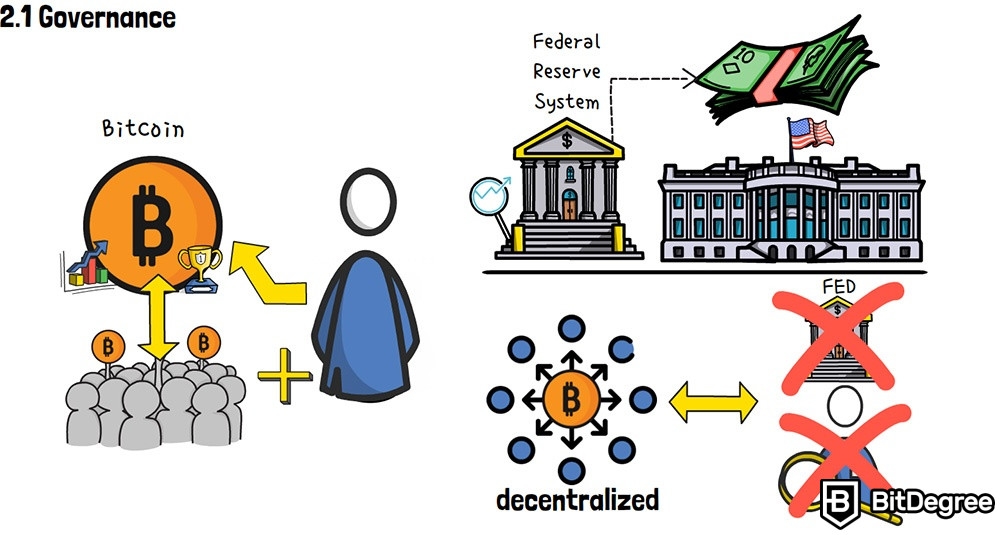
Decentralization essentially means that there is no single, central governing authority behind the cryptocurrency. With traditional money, you have governments and central banks watching over their currencies - for example, in the United States, the FED (or, the Federal Reserve System) is responsible for managing things such as inflation, and how much new money flows into the economy, every year.
With crypto, there’s no FED, and no other single governing party that would influence how a particular cryptocurrency will act. Instead, this is something that is decided by the market, itself - in other words, the holders of the cryptocurrency are responsible for what happens with it.
So, here’s another example. Think about the aforementioned Bitcoin, the biggest and most well-known cryptocurrency on the market. Every single aspect surrounding this crypto asset is decided by the community behind it. While the anonymous individual or a group of people (known as Satoshi Nakamoto) had created Bitcoin, after that was done, the rest was left with the community behind the asset. In other words, if you wanted to make some changes to Bitcoin, you would need to get the larger part of the community behind it!
Privacy and Transparency
This leads us to the next two points that I want to emphasize - privacy and transparency.
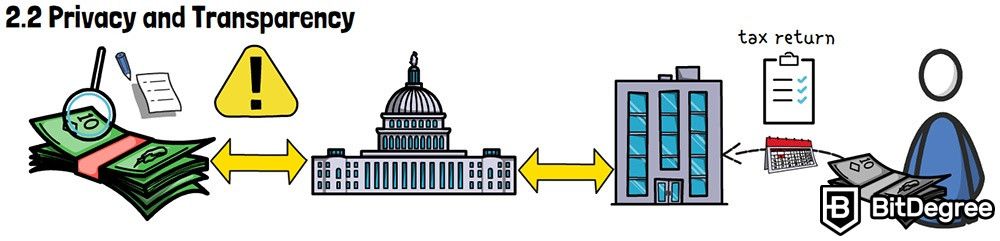
With traditional currencies, both of those things are pretty limited. Sure, you can go to the shop, and buy some bread with cash - no one will really know that it’s YOU who bought that bread, since there’s no credit card statement, and the transaction happened in cash.
That being said, that cash that you paid DID come from somewhere, didn’t it? Perhaps you’ve just withdrawn it from the ATM machine on the other side of the road? Or maybe you’ve borrowed it from a friend, or a colleague?
My point here is simple - no matter where you get your money from, it’s always tracked and logged by the government. If you DO manage to receive money from somewhere that the government doesn’t see, you are obligated to inform the relevant tax authorities in your country, in the form of a tax return filing, at the end of the year, or at any other designated point in time.
A quick sidenote - if, at the time you're reading this, tax season is around the corner, make sure to check out our dedicated section on how to avoid or minimize crypto taxes - legally, of course!
Now, as you figure out what are cryptocurrencies, you’ll notice that things are a bit different with this form of payment. The more you look into it, the more intricate and complicated it will appear to be - for that reason, we’re not going to look into the various exceptions, but let’s instead talk about the broader rules of the cryptocurrency industry.
So, with crypto, all of the transactions that you perform are going to be public. If it’s something that you weren’t aware of, it can sound scary. Do not fret, though - while your transaction WILL be public, no one will know that it’s YOU who is performing them. Each transaction is encrypted, and unless you go out and tell the whole world your personal cryptocurrency wallet address, no one will know.
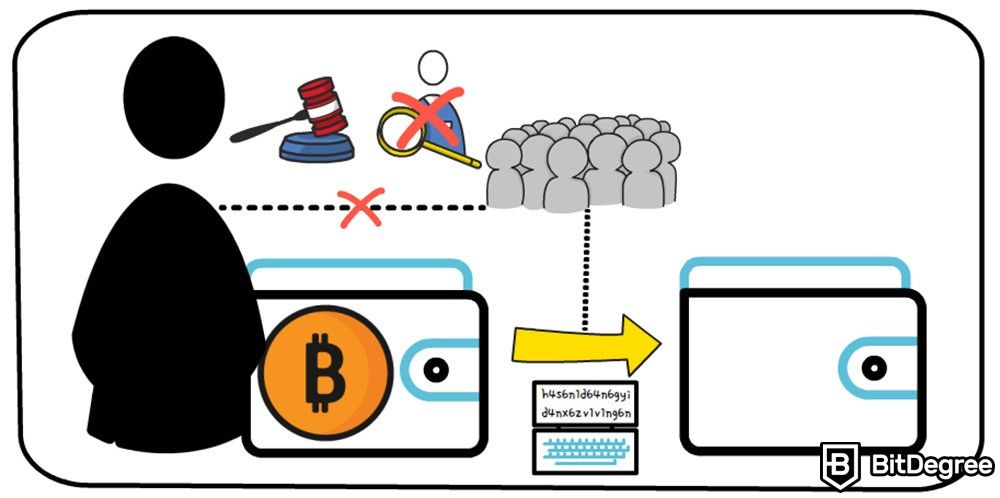
This is exactly how cryptocurrencies allow you to retain your privacy, while also being transparent assets themselves, too! Since you can trade cryptocurrencies anonymously, you don’t need to worry about someone snooping around your transactions - on top of that, since all of those transactions are public, transparency is easy to prove, as well!
Now, look - I do have to mention that you WILL probably need to report your transactions, and any potential income, to the relevant tax authorities in your country or region. Of course, each situation is different, and depends on crypto regulations in your area, but that’s just something that should be kept in mind!
Transaction Speed & Cost
The last big area where cryptocurrencies are quite different from traditional currencies has to do with the speed and cost of your transactions. Once again, allow me to illustrate this with an example.
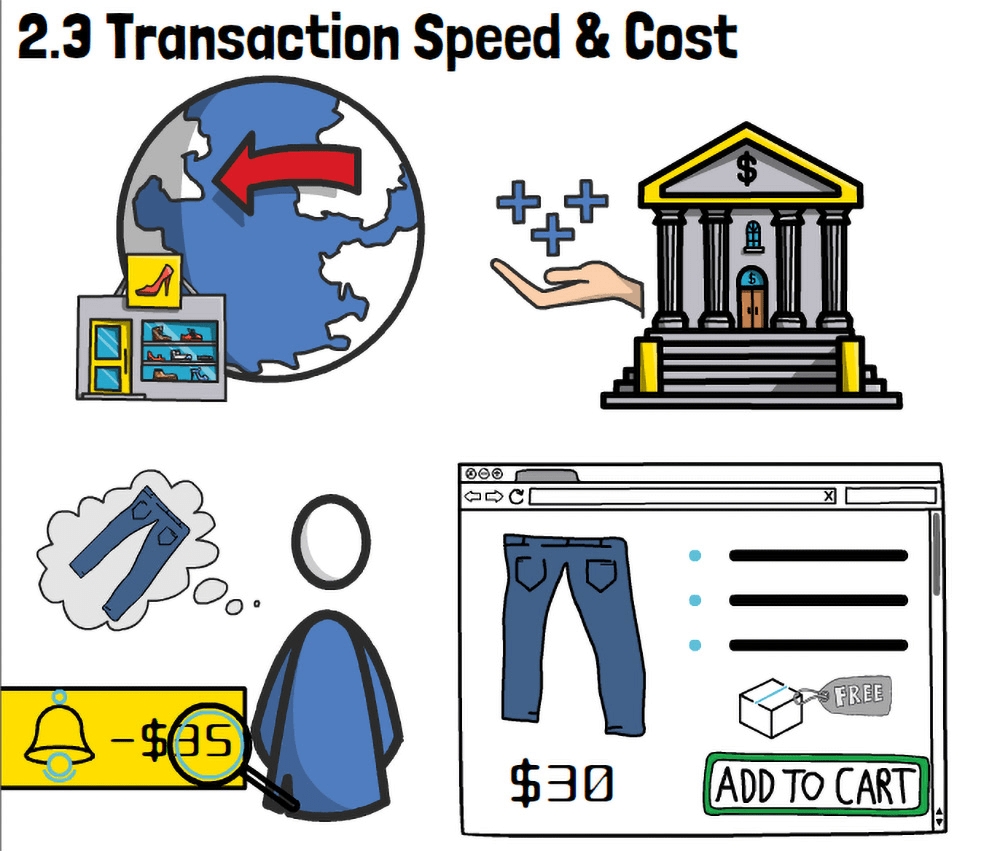
Imagine that you want to purchase a new pair of pants. You go online, and find an eShop that sells exactly what you’re looking for. The pants cost $30 - that’s a bargain, you say! Even the shipping is free, too!
That being said, as you make the purchase, you see that you were actually charged $35, instead of $30. Looking into it, you eventually learn that the shop is located on the other side of the world, and since that region falls into some sort of a different economic zone, there are extra charges from your bank, in order to perform that transaction.
Naturally, in reality, things are quite a bit more complicated than that, - still, though, the example illustrates my point, nonetheless!
Transactions that involve traditional currencies - or traditional payment gateways, for that matter - can get quite costly. It all depends on a variety of factors, but, once again - the point remains the same, either way!
On top of that, such transactions can also take a lot of time to be processed, as well. While we’re used to credit or debit card payments being processed almost immediately, oftentimes, the same cannot be said about wire and bank transfers, in general. If you perform a bank transfer at night, your transaction might not be processed until the next day! And this is only if you’re sending money to someone in the same region that you’re located in, too!
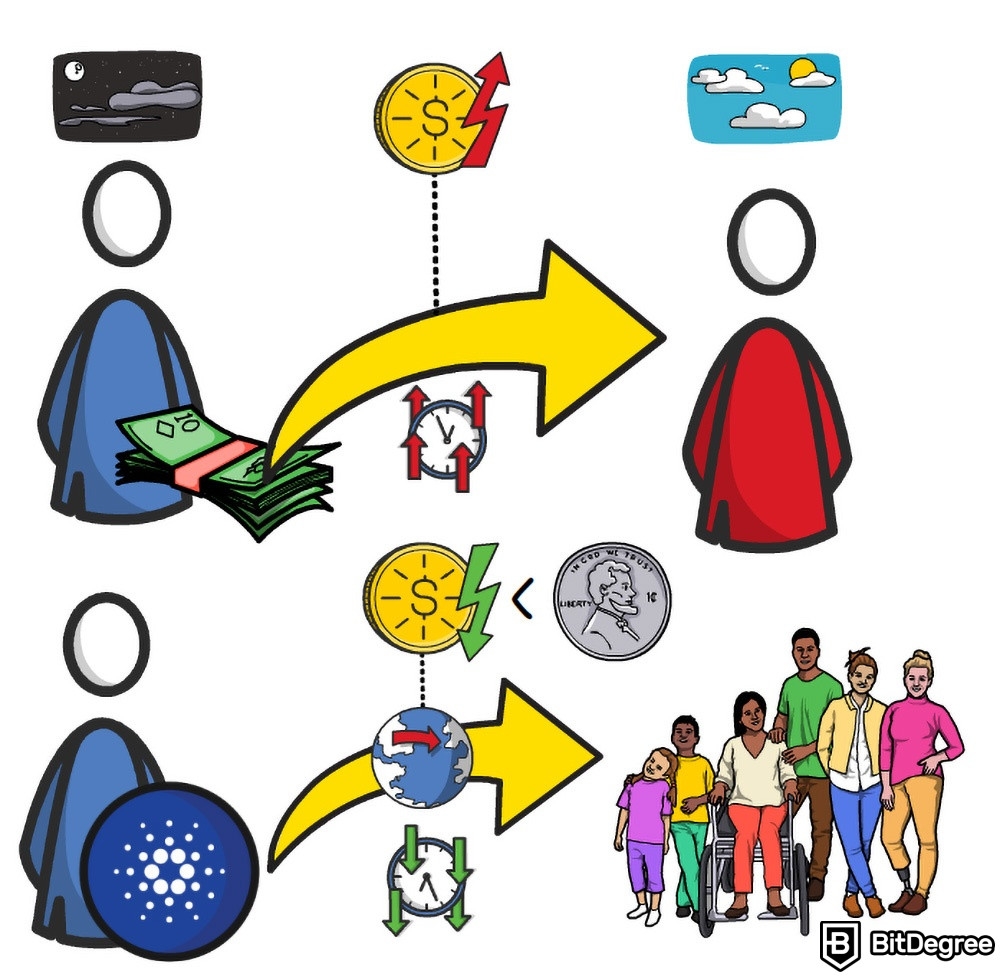
Understanding what are cryptocurrencies, things are very different, in both regards. When it comes to transaction costs, depending on the cryptocurrency that you might be transacting with, the fees could be as low as a fraction of a penny! Imagine sending a few thousand dollars to your family, on the other side of the world, and not even paying a cent for that transaction.
Could it get any better? Yes, it can - if that transaction was processed and completed in a matter of seconds. Once again, this is completely possible with cryptocurrency technology!
To wrap everything up, let me just say this - apart from everything I just talked about, there are multiple other benefits associated with cryptocurrencies, and the blockchain technology behind them!
Have you ever heard the term “<a href=https://www.bitdegree.org/"https:////www.bitdegree.org//crypto//learn//crypto-terms//what-is-miner/">cryptocurrency miner<\/strong><\/a>”? Well, this is what Proof-of-Work refers to - miners are people who employ their computers (or other special devices) to earn cryptocurrency for them! <strong>Miners earn crypto for confirming transactions happening on the blockchain<\/strong> - such as your transaction, where you send Tim your Bitcoin.<\/p>\n<p>As you might imagine, this is an entire, huge topic, in of its own! For now, though, just keep in mind what I said earlier - when you perform the transaction, it’s placed in a queue, on the blockchain, and awaits confirmation. Now, if your transaction is legitimate, it will receive all of the required confirmations, and the Bitcoin that you’ve sent will reach Tim’s wallet in no time.<\/p>\n<p>On the flip side, if you decide to “trick the system”, and try to perform some sort of a hacker-like faulty transaction, it will get denied, pretty fast - <strong>that’s the magic of consensus algorithms and blockchain security!<\/strong><\/p>\n<p>You should be aware of this entire process if you’re looking at how does investing in cryptocurrency work, as well. As you purchase crypto, or perform any other transactions, many of those processes will be happening in the background!<\/p>\n<p>All of that being said, that’s essentially how crypto transactions work! Mind you, as we’ve established earlier, each cryptocurrency is going to have this process look a bit different from the other. Especially nowadays, with so many new blockchain projects constantly springing up, all around. The premise, though, will remain the same, either way!<\/p>\n<h2>Why Should You Know How Cryptocurrencies Work?<\/h2>\n<p>So, then - now that you have a general idea of how cryptocurrencies work, it’s also worth addressing the “why” - specifically, <strong>why it’s important to know this<\/strong>, in the first place!<\/p>\n<p><img loading=\"lazy\" style=\"display: block; margin-left: auto; margin-right: auto;\" title=\"How does cryptocurrency work: Why should you know how cryptocurrencies work?\" src=https://www.bitdegree.org/"https:////assets.bitdegree.org//crypto//storage//media//how_does_cryptocurrency_work_05.o.jpg/" alt=\"How does cryptocurrency work: Why should you know how cryptocurrencies work?\" width=\"1000\" height=\"585\" \/><\/p>\n<p>Naturally, since you’re reading this, you do probably already have some reasons of your own. However, the point that I want to emphasize is that EVERYONE should learn about crypto - how it works, what happens during transactions, and so on.<\/p>\n<p>The biggest reason for why that’s the case is pretty simple, actually - <strong>with crypto becoming as popular as it is, it’s being integrated into our everyday lives! <\/strong>While the integrations are still very slow, I urge you to think about it - the simplest example would be major payment gateways, such as PayPal and Visa starting to accept and perform cryptocurrency transfers.<\/p>\n<p>Following that, if you understand how cryptocurrencies work, <strong>you will also have a much better chance of protecting yourself from potential scams and hacking attempts. <\/strong>No malicious individual or organization will be able to come in and trick you, since you will already understand the differences between a normal cryptocurrency transaction, and some shady dealing happening in the background.<\/p>\n<p>Lastly, learning about how cryptocurrencies work is also one of the very first steps that you can take when it comes to studying the crypto world, as a whole! Cryptocurrencies, and the blockchain technology behind them, are some of the core, essential elements that make up the entire industry.<\/p>\n<p>This is very true if you want to look into how does the crypto market work, or even how does investing in cryptocurrency work, as well! When you understand the technology behind crypto, and what happens during transactions, you’ll be much better-equipped to start your investment journey!<\/p>\n<p>All that you need to do in order to understand the importance of crypto tech is <strong>take a look at <a href=https://www.bitdegree.org/"https:////www.bitdegree.org//crypto//learn//what-is-defi/">DeFi, or decentralized finance.<\/strong> It’s a new-and-emerging form of finance, and one that already houses some huge investors, and incredible amounts of money. Well, no matter if it’s a cryptocurrency lending platform, a gambling game based on blockchain technology, or some sort of a wallet project, everything essentially boils down to the very fundamentals of how cryptocurrencies work!<\/p>","definition":"Did you know that cryptocurrencies and crypto transactions are considered to be an improvement over traditional banking institutions and conventional money transfer methods?","status":"published","meta_title":"How does Cryptocurrency Work? A Thorough Explanation","meta_description":"Trying to find an answer to the question \"how does cryptocurrency work?\" You'll find a thorough and beginner-friendly explanation here!","meta_keywords":"how does cryptocurrency work, how does crypto work, what is cryptocurrency and how does it work, how does cryptocurrency work for dummies, what makes a cryptocurrency valuable, how does investing in cryptocurrency work, how does the crypto market work","updated_at":"2024-04-05T16:52:23.000000Z","published_at":"2023-07-07T07:45:08.000000Z","youtube_video":{"id":35,"channel_id":1,"sort":84,"video_title":"How Does Cryptocurrency Work? (Explained with Animation)","description":"How does cryptocurrency work?\n\nThese days, transacting with cryptocurrencies has become a pretty common practice. Whether it be trading, sending crypto to friends, or even participating in DeFi activities, oftentimes, we don\u2019t really think about what\u2019s happening in the background.\n\nIn this video, I aim to address just that! I\u2019ll tell you how does cryptocurrency work, from the perspective of what happens when you perform a cryptocurrency transaction. I\u2019ll also talk about what makes cryptocurrenies unique, and explore some reasons why all of this should matter to you, in the first place!\n\nDo you know some examples of a unique crypto working model? If so, do share them in the comments down below!\n\nVideo Time Table:\n\n0:00 Introduction to How Does Cryptocurrency Work\n0:58 What Makes Cryptocurrencies Unique?\n4:24 What Happens During a Crypto Transaction?\n6:49 Why Should You Know How Cryptocurrencies Work?\n8:39 Wrap-up: How Does Cryptocurrency Work?\n\nMore Related Videos:\n\n? What is a Cryptocurrency?\nhttps:\/\/www.youtube.com\/watch?v=eVLUrZtKhBk\n? What is Blockchain?\nhttps:\/\/www.youtube.com\/watch?v=O2-XxMo5PFs\n? Blockchain Transaction Easily Explained\nhttps:\/\/www.youtube.com\/watch?v=h1zkHIBFiS4\n\nGet Quick Crypto Tips on Twitter - Follow:\nhttps:\/\/twitter.com\/crypto_xplained\n\n#HowDoesCryptocurrencyWork #HowDoesCryptoWork #WhatisCryptocurrencyandHowDoesitWork","video_id":"rAtJ7Lw90KA","duration":549,"view_count":1775,"thumbnail_url":"https:\/\/assets.bitdegree.org\/youtube\/crypto-finally-explained\/how-does-cryptocurrency-work-explained-with-animation.jpg","thumbnail_width":1280,"thumbnail_height":720,"published_at":"2022-08-31T15:21:42.000000Z","created_at":"2022-08-31T23:00:02.000000Z","updated_at":"2025-10-28T23:00:16.000000Z","channel":{"id":1,"title":"CryptoFinallyExplained","channel_id":"UCOryUY0yxC08eJtK23mNgiA","main_playlist_id":"UUOryUY0yxC08eJtK23mNgiA"}}}" :model="{"id":33,"chapter_id":2,"order":1,"featured_image_id":3064,"youtube_video_id":34,"author_id":1,"created_at":"2022-08-10T07:50:28.000000Z","slug":"what-is-a-cryptocurrency","title":"What is a Cryptocurrency?","content":"<p>In this section, I’m going to tell you what is a cryptocurrency!<\/p>\n<p>The world of <a href=https://www.bitdegree.org/"https:////www.bitdegree.org//crypto//learn//crypto-terms//what-is-cryptocurrency/">cryptocurrencies and <a href=https://www.bitdegree.org/"https:////www.bitdegree.org//crypto//learn//crypto-terms//what-is-blockchain/">blockchain technology<\/strong><\/a>, as a whole, is full of complicated concepts and ideas. To top that off, there seem to be new concepts being introduced to the general public, every other day or so! This can, for a fact, make it difficult for newbies to enter the industry.<\/p>\n<p>Even the most difficult concepts can become approachable and understandable, if you have your fundamentals straight, though! And that is exactly what I’m here to help you with - by explaining crypto topics in a fun and beginner-friendly manner! In crypto, all fundamentals start out with figuring out what is a cryptocurrency.<\/p>\n<p><strong>In this section, we’re going to talk about cryptocurrencies.<\/strong> I’ll tell you what they are, what’s the purposes behind them, and we’ll also talk about how they are different from traditional, global currencies.<\/p>\n<p><em>Without further ado, let’s get to it!<\/em><\/p>\n<h2>What is a Cryptocurrency?<\/h2>\n<p>So, how can the concept of cryptocurrencies be explained in a beginner-friendly way?<\/p>\n<p>The simplest possible answer to that question is that <strong>cryptocurrencies are digital money that’s based on blockchain technology. <\/strong>For the sake of keeping this section on topic, I won’t get into the details of what blockchains are - there's <a href=https://www.bitdegree.org/"https:////www.bitdegree.org//crypto//learn//what-is-blockchain/">a whole separate section<\/strong><\/a> about that in our Crypto 101 Handbook.<\/p>\n<p><img loading=\"lazy\" style=\"display: block; margin-left: auto; margin-right: auto;\" title=\"What is a cryptocurrency: Cryptography.\" src=https://www.bitdegree.org/"https:////assets.bitdegree.org//crypto//storage//media//what_is_cryptocurrency_01.o.png/" alt=\"What is a cryptocurrency: Cryptography.\" width=\"1000\" height=\"228\" \/><\/p>\n<p><strong>The term “crypto” is a shortened version of “cryptography”. <\/strong>If you’d like to learn what is <a href=https://www.bitdegree.org/"https:////www.bitdegree.org//crypto//learn//crypto-terms//what-is-cryptography/">cryptography, it’s honestly also a huge topic, in of its own - to put it short, though, it’s a form of solving and cracking difficult codes. So, the term “cryptocurrency” could be viewed as “digital, coded money”, in a very specific sense!<\/p>\n<p>At the time of writing this cryptocurrency explanation, there are currently around 20,000 different crypto assets out there, on the market. Not all of them are successful, though - it is estimated that around 1\/5th of all cryptocurrencies have failed. <em>That’s a huge number!<\/em><\/p>\n<p>Since examples are what I do best, allow me to give you one, in order to explain cryptocurrency, and to illustrate how crypto money is different from <a href=https://www.bitdegree.org/"https:////www.bitdegree.org//crypto//learn//crypto-terms//what-is-fiat/">fiat money<\/strong><\/a> - in other words, our traditional, global currencies that we use, every single day (USD, EUR, and so on).<\/p>\n<p><img loading=\"lazy\" style=\"display: block; margin-left: auto; margin-right: auto;\" title=\"What is a cryptocurrency: Fiat money.\" src=https://www.bitdegree.org/"https:////assets.bitdegree.org//crypto//storage//media//what_is_cryptocurrency_02.o.jpg/" alt=\"What is a cryptocurrency: Fiat money.\" width=\"1000\" height=\"346\" \/><\/p>\n<p>Imagine that you and your friend both decided to shop for concert tickets, online. A globally-huge pop star is coming to your city, and so, the tickets are hot - everyone’s trying to get their hands on them!<\/p>\n<p>Both you and your friend keep refreshing the ticket vendor’s webpage, waiting for those tickets to become available to be purchased. As soon as they go live, both of you rush to enter your details, too - <strong>every moment counts, after all!<\/strong><\/p>\n<p>In just a few minutes, your friend already has their tickets in the email, while you’re still struggling to enter your credit card details on the page. Once you’ve finally managed to do so, you are faced with an error - the bank is undergoing maintenance, and credit card payments won’t be completed until that’s done, sometime tomorrow.<\/p>\n<p>The end result? Your friend will go to the concert, while you’re going to have to find a different event… And wait for your credit card to start working again!<\/p>\n<p>Now, then - why was your friend able to complete their purchase? <strong>Whelp, you’ve guessed it - they were paying in crypto.<\/strong><\/p>\n<h2>Cryptocurrencies VS Traditional Money<\/h2>\n<p>Now, keeping that example in mind, I want to continue this “what is cryptocurrency for dummies” explanation by exploring some of the main differences between cryptocurrencies and traditional money & payment systems. This will hopefully help you get a better understanding of why crypto has become as popular as it is - well, at least part of the reason.<\/p>\n<p>The key differences between crypto and fiat money lie in <strong>governance, privacy, transparency, transaction speeds, and transaction costs.<\/strong><\/p>\n<h3>Governance<\/h3>\n<p>First things first - <a href=https://www.bitdegree.org/"https:////www.bitdegree.org//crypto//learn//crypto-terms//what-is-governance/">governance. This is something that is really at the core of crypto technology, and is one of the main reasons why cryptocurrencies came to be, in general! Ever since the creation of <a href=https://www.bitdegree.org/"https:////www.bitdegree.org//crypto//buy-bitcoin-btc/">Bitcoin in 2009, cryptocurrencies have always prided themselves on being <a href=https://www.bitdegree.org/"https:////www.bitdegree.org//crypto//learn//crypto-terms//what-is-decentralization/">decentralized (with a few exceptions).<\/p>\n<p><img loading=\"lazy\" style=\"display: block; margin-left: auto; margin-right: auto;\" title=\"What is a cryptocurrency: Governance.\" src=https://www.bitdegree.org/"https:////assets.bitdegree.org//crypto//storage//media//what_is_cryptocurrency_03.o.jpg/" alt=\"What is a cryptocurrency: Governance.\" width=\"1000\" height=\"535\" \/><\/p>\n<p>Decentralization essentially means that <strong>there is no single, central governing authority behind the cryptocurrency.<\/strong> With traditional money, you have governments and central banks watching over their currencies - for example, in the United States, the FED (or, the Federal Reserve System) is responsible for managing things such as <a href=https://www.bitdegree.org/"https:////www.bitdegree.org//crypto//learn//crypto-terms//what-is-inflation/">inflation, and how much new money flows into the economy, every year.<\/p>\n<p>With crypto, there’s no FED, and no other single governing party that would influence how a particular cryptocurrency will act. Instead, this is something that is decided by the market, itself - in other words, <strong>the holders of the cryptocurrency are responsible for what happens with it.<\/strong><\/p>\n<p>So, here’s another example. Think about the aforementioned Bitcoin, the biggest and most well-known cryptocurrency on the market. Every single aspect surrounding this crypto asset is decided by the community behind it. While the anonymous individual or a group of people (known as <a href=https://www.bitdegree.org/"https:////www.bitdegree.org//crypto//learn//crypto-terms//who-is-satoshi-nakamoto/">Satoshi Nakamoto<\/strong><\/a>) had created Bitcoin, after that was done, the rest was left with the community behind the asset. <strong>In other words, if you wanted to make some changes to Bitcoin, you would need to get the larger part of the community behind it!<\/strong><\/p>\n<h3>Privacy and Transparency<\/h3>\n<p>This leads us to the next two points that I want to emphasize - <strong>privacy and transparency.<\/strong><\/p>\n<p><img loading=\"lazy\" style=\"display: block; margin-left: auto; margin-right: auto;\" title=\"What is a cryptocurrency: Privacy and transparency.\" src=https://www.bitdegree.org/"https:////assets.bitdegree.org//crypto//storage//media//what_is_cryptocurrency_04-62f36932ea36a.o.jpg/" alt=\"What is a cryptocurrency: Privacy and transparency.\" width=\"1000\" height=\"241\" \/><\/p>\n<p>With traditional currencies, both of those things are pretty limited. Sure, you can go to the shop, and buy some bread with cash - no one will really know that it’s YOU who bought that bread, since there’s no credit card statement, and the transaction happened in cash.<\/p>\n<p>That being said, that cash that you paid DID come from somewhere, didn’t it? Perhaps you’ve just withdrawn it from the ATM machine on the other side of the road? Or maybe you’ve borrowed it from a friend, or a colleague?<\/p>\n<p>My point here is simple - <strong>no matter where you get your money from, it’s always tracked and logged by the government.<\/strong> If you DO manage to receive money from somewhere that the government doesn’t see, you are obligated to inform the relevant tax authorities in your country, in the form of a tax return filing, at the end of the year, or at any other designated point in time.<\/p>\n<p>A quick sidenote - if, at the time you're reading this, <strong>tax season <\/strong>is around the corner, make sure to check out our <a href=https://www.bitdegree.org/"https:////www.bitdegree.org//crypto//learn//how-to-avoid-crypto-taxes/">dedicated section<\/strong><\/a> on how to avoid or minimize crypto taxes - legally, of course!<\/p>\n<p>Now, as you figure out what are cryptocurrencies, you’ll notice that things are a bit different with this form of payment. The more you look into it, the more intricate and complicated it will appear to be - for that reason, we’re not going to look into the various exceptions, but let’s instead talk about the broader rules of the cryptocurrency industry.<\/p>\n<p><strong>So, with crypto, all of the transactions that you perform are going to be public.<\/strong> If it’s something that you weren’t aware of, it can sound scary.<em> <\/em>Do not fret, though - while your transaction WILL be public, no one will know that it’s YOU who is performing them. Each transaction is encrypted, and unless you go out and tell the whole world your personal <a href=https://www.bitdegree.org/"https:////www.bitdegree.org//crypto//learn//crypto-terms//what-is-address/">cryptocurrency wallet address<\/strong><\/a>, no one will know.<\/p>\n<p><img loading=\"lazy\" style=\"display: block; margin-left: auto; margin-right: auto;\" title=\"What is a cryptocurrency: Crypto wallet address.\" src=https://www.bitdegree.org/"https:////assets.bitdegree.org//crypto//storage//media//what_is_cryptocurrency_05.o.jpg/" alt=\"What is a cryptocurrency: Crypto wallet address.\" width=\"1000\" height=\"498\" \/><\/p>\n<p>This is exactly how cryptocurrencies allow you to retain your privacy, while also being transparent assets themselves, too! Since you can trade cryptocurrencies anonymously, you don’t need to worry about someone snooping around your transactions - on top of that, since all of those transactions are public, transparency is easy to prove, as well!<\/p>\n<p>Now, look - I do have to mention that <strong>you WILL probably need to report your transactions, and any potential income, to the relevant tax authorities in your country or region. <\/strong>Of course, each situation is different, and depends on crypto regulations in your area, but that’s just something that should be kept in mind!<\/p>\n<h3>Transaction Speed & Cost<\/h3>\n<p>The last big area where cryptocurrencies are quite different from traditional currencies has to do with <strong>the speed and cost of your transactions.<\/strong> Once again, allow me to illustrate this with an example.<\/p>\n<p><img loading=\"lazy\" style=\"display: block; margin-left: auto; margin-right: auto;\" title=\"What is a cryptocurrency: Transaction speed & cost.\" src=https://www.bitdegree.org/"https:////assets.bitdegree.org//crypto//storage//media//what_is_cryptocurrency_06.o.png/" alt=\"What is a cryptocurrency: Transaction speed & cost.\" width=\"1000\" height=\"851\" \/><\/p>\n<p>Imagine that you want to purchase a new pair of pants. You go online, and find an eShop that sells exactly what you’re looking for. The pants cost $30 - that’s a bargain, you say! Even the shipping is free, too!<\/p>\n<p>That being said, as you make the purchase, you see that you were actually charged $35, instead of $30. Looking into it, you eventually learn that the shop is located on the other side of the world, and since that region falls into some sort of a different economic zone, there are extra charges from your bank, in order to perform that transaction.<\/p>\n<p>Naturally, in reality, things are quite a bit more complicated than that, - still, though, the example illustrates my point, nonetheless!<\/p>\n<p><strong>Transactions that involve traditional currencies - or traditional payment gateways, for that matter - can get quite costly.<\/strong> It all depends on a variety of factors, but, once again - the point remains the same, either way!<\/p>\n<p>On top of that, such transactions can also take a lot of time to be processed, as well. While we’re used to credit or debit card payments being processed almost immediately, oftentimes, the same cannot be said about wire and bank transfers, in general. <strong>If you perform a bank transfer at night, your transaction might not be processed until the next day!<\/strong> And this is only if you’re sending money to someone in the same region that you’re located in, too!<\/p>\n<p><img loading=\"lazy\" style=\"display: block; margin-left: auto; margin-right: auto;\" title=\"What is a cryptocurrency: Transaction processing time.\" src=https://www.bitdegree.org/"https:////assets.bitdegree.org//crypto//storage//media//what_is_cryptocurrency_07.o.jpg/" alt=\"What is a cryptocurrency: Transaction processing time.\" width=\"1000\" height=\"977\" \/><\/p>\n<p>Understanding what are cryptocurrencies, things are very different, in both regards. <strong>When it comes to transaction costs, depending on the cryptocurrency that you might be transacting with, the fees could be as low as a fraction of a penny! <\/strong>Imagine sending a few thousand dollars to your family, on the other side of the world, and not even paying a cent for that transaction.<\/p>\n<p><em>Could it get any better?<\/em> Yes, it can - if that transaction was processed and completed in a matter of seconds. Once again, this is completely possible with cryptocurrency technology!<\/p>\n<p>To wrap everything up, let me just say this - apart from everything I just talked about, there are multiple other benefits associated with cryptocurrencies, and the blockchain technology behind them!<\/p>","definition":"Did you know that there are thousands of cryptocurrencies out there and the number keeps growing?","status":"published","meta_title":"What is a Cryptocurrency: A Begginer-Friendly Explanation","meta_description":"Searching for a simple yet thorough answer to the question \"what is a cryptocurrency?\" Find the most beginner-friendly explanation here!","meta_keywords":"what is a cryptocurrency, cryptocurrency for beginners, what is cryptocurrency, what is crypto, what is crypto currency, crypto meaning, cryptocurrency meaning, cryptocurrency for dummies, what is cryptocurrency for dummies, what is cryptography, what are cryptocurrencies, explain cryptocurrency, what is cryptocurrency used for, what is a crypto coin, what is crypto money, how many crypto millionaires are there, who created cryptocurrency, what does cryptocurrency mean, how do you use cryptocurrency, where does cryptocurrency come from, how many cryptocurrencies have failed, how many cryptocurrency are there, why use cryptocurrency, is cryptocurrency worth it, whose currency is worth the most, what is crypto investment","updated_at":"2024-04-05T16:51:41.000000Z","published_at":"2023-07-07T07:45:08.000000Z","youtube_video":{"id":34,"channel_id":1,"sort":85,"video_title":"What is a Cryptocurrency: For Beginners (Animated Explainer)","description":"Wondering what is a cryptocurrency?\n\nCryptocurrencies are something that we see and come across, every single day, whether it be by buying, selling, and trading them, or simply reading about them online. However, at the end of the day, when you boil it down, do you really know what is a cryptocurrency?\n\nThat is exactly the question that I aim to answer in this video! I will tell you both what cryptocurrencies are, as well as how they are different from (and, oftentimes - superior to) traditional, fiat money.\n\nAre you looking to get into cryptocurrencies? If so, which ones are you a fan of? Let me know, in the comment section below!\n\nVideo Time Table:\n\n0:00 Introduction to What is a Cryptocurrency\n0:58 What is a Cryptocurrency Explained\n2:58 Cryptocurrencies vs Traditional Money\n8:41 Wrapping up: What is a Cryptocurrency?\n\nMore Related Videos:\n\n? Crypto Token VS Coin\nhttps:\/\/www.youtube.com\/watch?v=kNAC7CXFOTw\n? What is Blockchain?\nhttps:\/\/www.youtube.com\/watch?v=O2-XxMo5PFs\n? What is a Smart Contract?\nhttps:\/\/www.youtube.com\/watch?v=0VCMtKx9AxU\n? What is Cardano in Crypto?\nhttps:\/\/www.youtube.com\/watch?v=bn6Vxt_RTbI\n\nGet Quick Crypto Tips on Twitter - Follow:\nhttps:\/\/twitter.com\/crypto_xplained\n\n#WhatisaCryptocurrency #CryptocurrencyForBeginners #WhatisCrypto","video_id":"eVLUrZtKhBk","duration":546,"view_count":2502,"thumbnail_url":"https:\/\/assets.bitdegree.org\/youtube\/crypto-finally-explained\/what-is-a-cryptocurrency-for-beginners-animated-explainer.jpg","thumbnail_width":1280,"thumbnail_height":720,"published_at":"2022-08-17T15:16:36.000000Z","created_at":"2022-08-17T23:00:02.000000Z","updated_at":"2025-10-28T23:00:16.000000Z","channel":{"id":1,"title":"CryptoFinallyExplained","channel_id":"UCOryUY0yxC08eJtK23mNgiA","main_playlist_id":"UUOryUY0yxC08eJtK23mNgiA"}},"featured_image":{"id":3064,"uuid":"afcb81f6-c56e-4ee0-855d-28e1a21023b5","user_id":null,"name":"what-is-cryptocurrency-featured-image.o.jpg","url":"https:\/\/assets.bitdegree.org\/crypto\/storage\/media\/what-is-cryptocurrency-featured-image.o.jpg","path":"crypto\/storage\/media\/what-is-cryptocurrency-featured-image.o.jpg","mime_type":"image\/jpeg","disk":"s3","size":92258,"width":768,"height":478,"custom_properties":null,"is_ai_generating":false,"created_at":"2023-06-19T06:58:36.000000Z","updated_at":"2024-07-09T13:25:11.000000Z"},"crypto_book_chapter":{"id":2,"is_updated":null,"image_url":"crypto\/assets\/crypto-book\/chapters\/learn-cryptocurrencies.jpg","image_url_simple":"crypto\/assets\/crypto-book\/chapters-simple\/cryptocurrencies-101.jpg","rating":100,"created_at":"2024-03-29T15:17:14.000000Z","updated_at":"2024-03-29T15:17:14.000000Z","title":"Cryptocurrencies"}}" :chapter-list="[{"id":1,"is_updated":null,"image_url":"crypto\/assets\/crypto-book\/chapters\/learn-blockchain.jpg","image_url_simple":"crypto\/assets\/crypto-book\/chapters-simple\/blockchain-101.jpg","rating":100,"created_at":"2024-03-29T15:17:14.000000Z","updated_at":"2024-03-29T15:17:14.000000Z","title":"Blockchain","crypto_book_sections":[{"chapter_id":1,"order":1,"slug":"what-is-blockchain","title":"What is the Blockchain?","status":"published"},{"chapter_id":1,"order":2,"slug":"decentralized-blockchain","title":"Anonymous & Decentralized Blockchains: The Cornerstone of Crypto","status":"published"},{"chapter_id":1,"order":3,"slug":"blockchain-transaction","title":"What is a Blockchain Transaction in Crypto?","status":"published"},{"chapter_id":1,"order":4,"slug":"crypto-fees","title":"The Different Types of Crypto Fees Explained","status":"published"},{"chapter_id":1,"order":5,"slug":"what-is-bridging-in-crypto","title":"The Key Notion Behind the Concept of Bridging in Crypto","status":"published"},{"chapter_id":1,"order":6,"slug":"types-of-blockchains","title":"Different Types of Blockchains: What to Look Out For?","status":"published"}]},{"id":2,"is_updated":null,"image_url":"crypto\/assets\/crypto-book\/chapters\/learn-cryptocurrencies.jpg","image_url_simple":"crypto\/assets\/crypto-book\/chapters-simple\/cryptocurrencies-101.jpg","rating":100,"created_at":"2024-03-29T15:17:14.000000Z","updated_at":"2024-03-29T15:17:14.000000Z","title":"Cryptocurrencies","crypto_book_sections":[{"chapter_id":2,"order":1,"slug":"what-is-a-cryptocurrency","title":"What is a Cryptocurrency?","status":"published"},{"chapter_id":2,"order":2,"slug":"how-does-cryptocurrency-work","title":"How Does Cryptocurrency Work?","status":"published"},{"chapter_id":2,"order":3,"slug":"is-cryptocurrency-a-good-investment","title":"Is Cryptocurrency a Good Investment? The Pros & Cons","status":"published"},{"chapter_id":2,"order":4,"slug":"coin-vs-token","title":"Coin VS Token: How Do They Differ?","status":"published"},{"chapter_id":2,"order":5,"slug":"what-are-stablecoins","title":"What are Stablecoins, Altcoins & Wrapped Coins?","status":"published"},{"chapter_id":2,"order":6,"slug":"what-is-a-bitcoin","title":"Bitcoin: the Pioneer of the Crypto World","status":"published"},{"chapter_id":2,"order":7,"slug":"what-is-ethereum","title":"The Ultimate Blockchain for dApp Creation: Ethereum","status":"published"},{"chapter_id":2,"order":8,"slug":"what-is-cardano-in-crypto","title":"What is Cardano and What is It Used For?","status":"published"},{"chapter_id":2,"order":9,"slug":"what-is-shiba-inu-coin","title":"Shiba Inu: the Dogecoin Killer","status":"published"},{"chapter_id":2,"order":10,"slug":"what-is-solana-in-crypto","title":"Is Solana an Improved Version of Ethereum?","status":"published"},{"chapter_id":2,"order":11,"slug":"what-is-polkadot-in-crypto","title":"The Bridge Between Blockchains: Polkadot","status":"published"},{"chapter_id":2,"order":12,"slug":"what-is-polygon-in-crypto","title":"Polygon: the Essential Scaling Solution for Ethereum","status":"published"},{"chapter_id":2,"order":13,"slug":"what-is-luna-crypto","title":"The Bumpy Road of Terra (LUNA)","status":"published"},{"chapter_id":2,"order":14,"slug":"what-is-fantom-crypto","title":"Is Fantom (FTM) Yet Another Ethereum Killer?","status":"published"},{"chapter_id":2,"order":15,"slug":"what-is-aave-crypto","title":"Aave: Crypto Lending Trailblazer","status":"published"},{"chapter_id":2,"order":16,"slug":"what-is-algorand-crypto","title":"Did Algorand Truly Solve the Blockchain Trilemma?","status":"published"},{"chapter_id":2,"order":17,"slug":"what-is-olympus-dao","title":"Does Olympus DAO Have Anything to Do With Mythology?","status":"published"},{"chapter_id":2,"order":18,"slug":"what-is-avax","title":"Is Avalanche Network (AVAX) Rightfully Called the Future of DeFi?","status":"published"},{"chapter_id":2,"order":19,"slug":"what-is-monero-coin","title":"Monero: Where Cryptocurrency Meets Cryptography","status":"published"},{"chapter_id":2,"order":20,"slug":"what-is-ripple-xrp","title":"Is Ripple \"it\" When it Comes to Cross-Border Transactions?","status":"published"},{"chapter_id":2,"order":21,"slug":"practical-use-of-cryptocurrencies","title":"The Practical Use of Crypto","status":"published"}]},{"id":3,"is_updated":null,"image_url":"crypto\/assets\/crypto-book\/chapters\/learn-crypto-exchanges.jpg","image_url_simple":"crypto\/assets\/crypto-book\/chapters-simple\/crypto-exchanges-101.jpg","rating":80,"created_at":"2024-03-29T15:17:14.000000Z","updated_at":"2024-03-29T15:17:14.000000Z","title":"Crypto Exchanges","crypto_book_sections":[{"chapter_id":3,"order":1,"slug":"how-do-cryptocurrency-exchanges-work","title":"How do Cryptocurrency Exchanges Work?","status":"published"},{"chapter_id":3,"order":2,"slug":"dex-vs-cex","title":"DEX VS CEX: Two Sides of the Crypto Exchange Industry","status":"published"},{"chapter_id":3,"order":3,"slug":"crypto-day-trading","title":"Crypto Day Trading: The Difference Between Buying, Trading, and Swapping","status":"published"},{"chapter_id":3,"order":4,"slug":"kyc-crypto","title":"KYC & AML: The Key to Complying With Legal Industry Standards","status":"published"},{"chapter_id":3,"order":5,"slug":"how-to-buy-crypto","title":"From Fiat to Crypto: How to Buy Crypto for the First Time","status":"published"},{"chapter_id":3,"order":6,"slug":"fiat-to-crypto","title":"Taking Profits: Turning Crypto Into Fiat","status":"published"},{"chapter_id":3,"order":7,"slug":"how-to-use-crypto","title":"You\u2019ve Got Crypto: What Can You Do With It?","status":"published"}]},{"id":4,"is_updated":0,"image_url":"crypto\/assets\/crypto-book\/chapters\/learn-crypto-wallets.jpg","image_url_simple":"crypto\/assets\/crypto-book\/chapters-simple\/crypto-wallets-101.jpg","rating":80,"created_at":"2024-03-29T15:17:14.000000Z","updated_at":"2024-03-29T15:17:14.000000Z","title":"Crypto Wallets","crypto_book_sections":[{"chapter_id":4,"order":1,"slug":"what-is-a-crypto-wallet","title":"What is a Crypto Wallet?","status":"published"},{"chapter_id":4,"order":2,"slug":"hot-wallet-vs-cold-wallet","title":"Hot Wallet VS Cold Wallet: Which One to Pick?","status":"published"},{"chapter_id":4,"order":3,"slug":"non-custodial-wallet","title":"What are Non-Custodial Crypto Wallets?","status":"published"},{"chapter_id":4,"order":4,"slug":"what-is-metamask","title":"Metamask: The Leading Non-Custodial Wallet","status":"published"},{"chapter_id":4,"order":5,"slug":"how-safe-is-cryptocurrency","title":"The Key Crypto Wallet Safety Practices: How Safe Can Crypto Be?","status":"published"}]},{"id":5,"is_updated":null,"image_url":"crypto\/assets\/crypto-book\/chapters\/learn-nfts.jpg","image_url_simple":"crypto\/assets\/crypto-book\/chapters-simple\/nfts-101.jpg","rating":100,"created_at":"2024-03-29T15:17:14.000000Z","updated_at":"2024-03-29T15:17:14.000000Z","title":"NFTs","crypto_book_sections":[{"chapter_id":5,"order":1,"slug":"what-are-nfts","title":"What are Non-Fungible Tokens (NFTs)?","status":"published"},{"chapter_id":5,"order":2,"slug":"how-to-trade-nfts","title":"NFT Trading: The Ins and Outs","status":"published"},{"chapter_id":5,"order":3,"slug":"buying-nft","title":"Tips and Tricks of Choosing the Right NFTs","status":"published"},{"chapter_id":5,"order":4,"slug":"how-to-store-nft","title":"How to Store NFTs: Best Practices","status":"published"},{"chapter_id":5,"order":5,"slug":"how-to-create-an-nft","title":"How to Create Your Own NFTs?","status":"published"},{"chapter_id":5,"order":6,"slug":"how-to-make-passive-money-with-nft","title":"Making Passive Money with NFTs","status":"published"}]},{"id":6,"is_updated":1,"image_url":"crypto\/assets\/crypto-book\/chapters\/learn-dapps.jpg","image_url_simple":"crypto\/assets\/crypto-book\/chapters-simple\/dapps-defi-101.jpg","rating":80,"created_at":"2024-03-29T15:17:14.000000Z","updated_at":"2024-03-29T15:17:14.000000Z","title":"dApps & Defi","crypto_book_sections":[{"chapter_id":6,"order":1,"slug":"what-is-defi","title":"What is Decentralized Finance (DeFi)?","status":"published"},{"chapter_id":6,"order":2,"slug":"what-is-defi-2-0","title":"DeFi 2.0: The New Version of Decentralized Finance","status":"published"},{"chapter_id":6,"order":3,"slug":"what-are-dapps-in-crypto","title":"What Are dApps and How Do They Work?","status":"published"},{"chapter_id":6,"order":4,"slug":"defi-dapps","title":"Picking the Right dApps: Dos and Don'ts","status":"published"},{"chapter_id":6,"order":5,"slug":"what-is-web-3-0","title":"Web 3.0: The Future of the Internet","status":"published"},{"chapter_id":6,"order":6,"slug":"what-are-smart-contracts","title":"What is the Core Purpose of Smart Contracts?","status":"published"},{"chapter_id":6,"order":7,"slug":"what-is-a-dao-in-crypto","title":"The Notion of a Decentralized Autonomous Ogranization (DAO)","status":"published"},{"chapter_id":6,"order":8,"slug":"what-is-staking-in-crypto","title":"What is the Goal of Staking Crypto Assets?","status":"published"},{"chapter_id":6,"order":9,"slug":"what-is-liquidity-pool-in-crypto","title":"What is a Liquidity Pool and How Does It Work?","status":"published"},{"chapter_id":6,"order":10,"slug":"what-is-automated-market-maker","title":"Automated Market Maker: the Cornerstone of the Decentralized Crypto Exchange Industry","status":"published"},{"chapter_id":6,"order":11,"slug":"what-is-yield-farming-in-crypto","title":"The Main Yield Farming Techniques","status":"published"},{"chapter_id":6,"order":12,"slug":"what-is-an-oracle-in-crypto","title":"Crypto Oracles: The Link Between Blockchain and Outside World Data","status":"published"},{"chapter_id":6,"order":13,"slug":"crypto-gambling","title":"The Peculiarities of Decentralized Crypto Gambling","status":"published"},{"chapter_id":6,"order":14,"slug":"what-is-the-metaverse","title":"Metaverse: A New Perception of Reality","status":"published"}]},{"id":7,"is_updated":null,"image_url":"crypto\/assets\/crypto-book\/chapters\/learn-crypto-trading.jpg","image_url_simple":"crypto\/assets\/crypto-book\/chapters-simple\/crypto-trading-101.jpg","rating":80,"created_at":"2024-03-29T15:17:14.000000Z","updated_at":"2024-03-29T15:17:14.000000Z","title":"Trading & Investing","crypto_book_sections":[{"chapter_id":7,"order":1,"slug":"where-to-trade-crypto","title":"Where Can You Trade Cryptocurrencies?","status":"published"},{"chapter_id":7,"order":2,"slug":"how-to-invest-in-crypto","title":"Investing in Crypto: What Investing Options Do You Have?","status":"published"},{"chapter_id":7,"order":3,"slug":"ico-vs-ido","title":"ICO vs IDO vs IEO: Which One is the One?","status":"published"},{"chapter_id":7,"order":4,"slug":"what-is-an-airdrop","title":"What are Crypto Airdrops and How to Get Them?","status":"published"},{"chapter_id":7,"order":5,"slug":"how-to-get-free-crypto","title":"How to Get Free Crypto Assets?","status":"published"},{"chapter_id":7,"order":6,"slug":"how-to-arbitrage-crypto","title":"What is Crypto Arbitrage: The Main Principles","status":"published"},{"chapter_id":7,"order":7,"slug":"what-is-a-perpetual-contract","title":"Perpetual Contracts: Futures Contracts Without an Expiration Date","status":"published"},{"chapter_id":7,"order":8,"slug":"what-is-fud","title":"What is FUD: How to Use It to Your Advantage While Investing in Crypto?","status":"published"},{"chapter_id":7,"order":9,"slug":"investing-in-cryptocurrency","title":"Investing in Cryptocurrency: How to Manage Your Risks?","status":"published"},{"chapter_id":7,"order":10,"slug":"what-is-a-rug-pull-in-crypto","title":"What is a Rug Pull in Crypto?","status":"published"},{"chapter_id":7,"order":11,"slug":"how-to-avoid-rug-pulls-in-crypto","title":"How to Spot and Avoid Rug Pulls?","status":"published"},{"chapter_id":7,"order":12,"slug":"how-to-avoid-crypto-taxes","title":"The Key Legal Techniques of Avoiding Crypto Taxes","status":"published"}]},{"id":8,"is_updated":null,"image_url":"crypto\/assets\/crypto-book\/chapters\/learn-crypto-analysis.jpg","image_url_simple":"crypto\/assets\/crypto-book\/chapters-simple\/crypto-analysis-101.jpg","rating":100,"created_at":"2024-03-29T15:17:14.000000Z","updated_at":"2024-03-29T15:17:14.000000Z","title":"Crypto Analysis","crypto_book_sections":[{"chapter_id":8,"order":1,"slug":"what-is-bullish-and-bearish","title":"Bearish and Bullish Markets: Do They Matter?","status":"published"},{"chapter_id":8,"order":2,"slug":"best-technical-analysis-indicators-for-crypto","title":"Crypto Technical Analysis Indicators You Must Know About","status":"published"},{"chapter_id":8,"order":3,"slug":"what-is-candlesticks","title":"Technical Analysis: What are Candlesticks, Trendlines, and Patterns?","status":"published"},{"chapter_id":8,"order":4,"slug":"how-to-track-new-crypto-coins","title":"Crypto Tracking: How to Track Your Favorite Coins & Tokens?","status":"published"},{"chapter_id":8,"order":5,"slug":"how-to-research-crypto","title":"Crypto Research Fundamentals & Social Signals: Your Daily Trading Strategy","status":"published"},{"chapter_id":8,"order":6,"slug":"portfolio-diversification-definition","title":"Portfolio Diversification: The Whats, the Whys, and the Hows","status":"published"}]},{"id":9,"is_updated":0,"image_url":"crypto\/assets\/crypto-book\/chapters\/learn-crypto-mining.jpg","image_url_simple":"crypto\/assets\/crypto-book\/chapters-simple\/crypto-mining-101.jpg","rating":80,"created_at":"2024-03-29T15:17:14.000000Z","updated_at":"2024-03-29T15:17:14.000000Z","title":"Mining","crypto_book_sections":[{"chapter_id":9,"order":1,"slug":"what-is-crypto-mining","title":"Crypto Mining: What It is and How Does It Work?","status":"published"},{"chapter_id":9,"order":2,"slug":"what-is-a-mining-pool","title":"Mining Pools: Is Collective Mining Better Than Solo Mining?","status":"published"},{"chapter_id":9,"order":3,"slug":"what-is-staking-crypto","title":"An Advanced Look into What is Staking Crypto","status":"published"},{"chapter_id":9,"order":4,"slug":"what-is-proof-of-stake-vs-proof-of-work","title":"Proof-of-Work VS Proof-of-Stake: The Differences That Matter","status":"published"},{"chapter_id":9,"order":5,"slug":"what-is-crypto-mining-rig","title":"Crypto Mining Rig: What It is and How to Build One?","status":"published"}]},{"id":10,"is_updated":0,"image_url":"crypto\/assets\/crypto-book\/chapters\/crypto-101-glossary.jpg","image_url_simple":"crypto\/assets\/crypto-book\/chapters-simple\/crypto-glossary-101.jpg","rating":100,"created_at":"2024-03-29T15:17:14.000000Z","updated_at":"2024-03-29T15:17:14.000000Z","title":"Crypto Terms","crypto_book_sections":[]}]" current-chapter="" current-section="what-is-a-cryptocurrency">